
Thinking about freshening up your smile? You’re not the only one. Across the UK, more people want cosmetic dentistry that looks natural, feels comfortable, and fits real life. Two options top the list: composite bonding and porcelain veneers. Both work. Both look good. But they suit different goals, budgets, and timelines.
Let’s break it down in plain English—so you can choose with confidence, not guesswork.
What Is Composite Bonding?
Composite bonding is a simple, gentle treatment. Your dentist adds a tooth-coloured resin to your tooth, shapes it to match, sets it with a light, then polishes it. Most cases are done in one visit. No long drilling. Often no anaesthetic. Minimal fuss.
It’s Brilliant For:
Small chips and cracks
Closing little gaps
Smoothing uneven edges
Masking surface stains or mild discolouration
Why People Like Bonding
It’s budget-friendly next to veneers
It’s quick—usually one appointment
It keeps your natural tooth mostly as is
It’s reversible and easy to refine
It’s ideal for minor cosmetic tweaks
What To Keep In Mind
It’s not as hard-wearing as porcelain (think 3 to 7 years on average)
It can stain from tea, coffee, red wine, or curry
It may need the odd polish or touch-up to stay at its best
Larger changes can look fine, but they may not last as long
What Are Porcelain Veneers?
Porcelain veneers are thin, custom-made ceramic shells that sit on the front of your teeth. To make space, a small amount of enamel is usually removed. The veneers are then bonded in place for a neat, natural look. You’ll need at least two visits, as a dental lab makes the veneers to fit your smile.
Veneers Are Great For:
Deep discolouration that won’t shift with whitening
Worn, uneven, or misshapen teeth
Closing gaps and softening minor alignment issues
Full smile makeovers with long-lasting gloss
Why People Choose Veneers
They last—often 10 to 15 years or more with good care
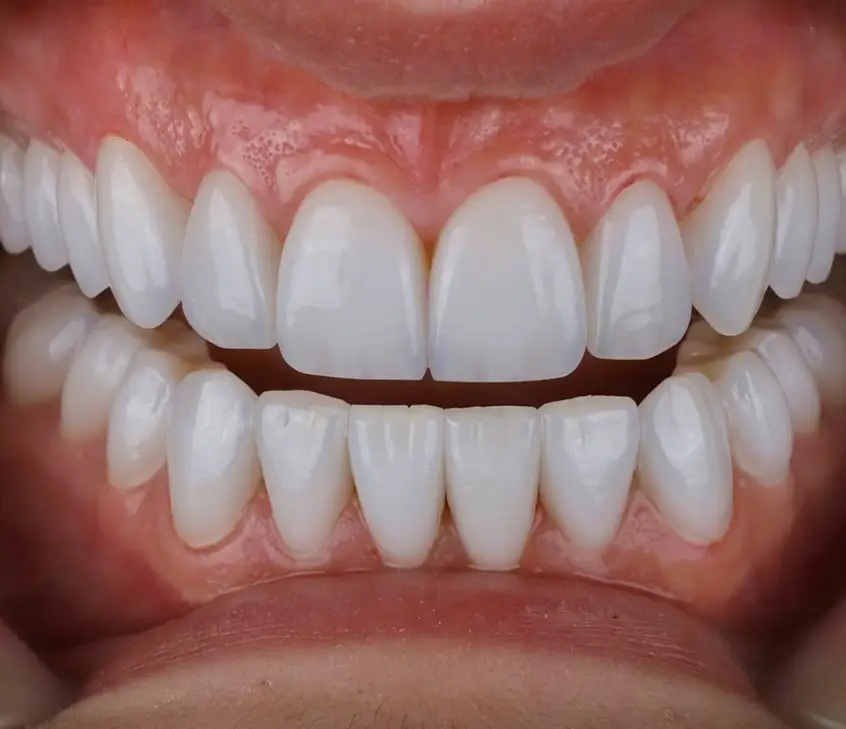
Porcelain looks lifelike, with a lovely translucency
They resist stains very well
They can transform the whole look of a smile
Shades and shapes are finely tailored to you
What To Weigh Up
They cost more than bonding
Enamel removal means the procedure is not reversible
You’ll need at least two visits
If damaged, repair can be tricky; replacement is sometimes needed
Bonding Vs Veneers: A Clean, No-Fuss Comparison
Procedure Time
Bonding: usually one visit
Veneers: two or more visits
Tooth Preparation
Bonding: minimal or none
Veneers: a small amount of enamel is removed
Durability
Bonding: around 3 to 7 years
Veneers: around 10 to 15+ years
Cost
Bonding: lower upfront cost
Veneers: higher upfront cost
Aesthetics
Bonding: ideal for subtle improvements
Veneers: best for a full, ultra-natural makeover
Repair And Maintenance
Bonding: easy to repair or refresh
Veneers: often replaced if damaged
Stain Resistance
Bonding: moderate
Veneers: high
Reversibility
Bonding: yes
Veneers: no
So… Which Suits You?
It depends on your aims, your budget, and your day-to-day life.
Want a quick, affordable tidy-up for small chips, edges, or gaps? Composite bonding is a smart choice.
Want a long-term, high-impact result that still looks natural? Porcelain veneers are hard to beat.
Love a strong cuppa or a glass of Malbec? Veneers resist stains better.
Keen to keep your enamel untouched? Bonding will feel more comfortable.
Grind your teeth? Tell your dentist. A night guard can help protect either option.
Not sure which shade or shape suits you? A test-drive with photos or a mock-up can help.
A Brief Side Note For UK Patients
Most cosmetic dentistry, including bonding and veneers, is provided privately rather than on the NHS. Fees vary with the case, the materials, and your clinician’s experience.
A proper consultation—often with photos and a digital mock-up lets you see the plan before you commit. That peace of mind matters. Clear timelines and written estimates help too. Ask about maintenance and long-term care so you know the full picture.
Real People, Real Choices
Sarah wanted to close a couple of small gaps and fix a chipped front tooth before a big family event. She chose composite bonding. It was quick, cost-effective, and looked great straightaway. Three years on—many coffees and a few winters of red wine later—she popped in for a light polish and a small touch-up. Back to bright. Simple.
John had worn front teeth and patchy discolouration. He went for porcelain veneers as part of a wider smile makeover. The result looked natural, not “done”. With regular check-ups and sensible care, he’s enjoyed that neat, even look for well over a decade. Confident smile, every day.
Keeping Your New Smile Looking Sharp
Brush twice a day with a soft brush and a gentle, low-abrasive toothpaste
Floss or use interdental brushes daily
See your dentist and hygienist as advised
Skip nail-biting and pen-chewing (we all do it; try to stop)
Use a mouthguard for sport and a night guard if you grind
Rinse after tea, coffee, or red wine; it helps—small habits add up
Book regular reviews to spot wear, chips, or stains early
A Quick Word On Alternatives
Sometimes whitening, minor orthodontics, or edge bonding is enough. Sometimes a mix—whitening plus bonding, or a couple of veneers paired with bonding—gives the best blend of value and looks. Good cosmetic dentistry is bespoke, not one-size-fits-all. The plan should fit your mouth and your life. Not the other way round.
The Bottom Line
Composite bonding and porcelain veneers both have a place. Bonding is the easy, conservative, great-value option for small upgrades. Veneers are the premium, longer-term choice for a full, natural-looking change. Neither is “better” in every case. The right choice is the one that fits your teeth, your taste, and your budget. Simple as that.
Ready To Explore Your Options In Ilkley?
At Regent Dental in Ilkley, we tailor treatment to you—your teeth, your goals, your budget. Our clinicians offer composite bonding and porcelain veneers with care and attention to detail. We use digital planning and modern materials to aim for natural, lasting results. Want a subtle refresh? Or a full smile makeover?
We’ll guide you with honest advice and kind, careful dentistry. Book a consultation and chat through what’s possible. We’ll take the time to listen, show examples, and build a plan you feel good about. A confident smile changes how you feel day to day—on the school run, in a meeting, or out for a Friday night in Leeds. You deserve that.
Conclusion
If you want quick fixes for small flaws, choose bonding. If you want a durable, all-round upgrade, choose veneers. Not sure? Start with a chat, a plan, and a clear view of costs and care. The right treatment is the one that makes you smile—today and in the years ahead.