
Thinking about implants can feel like a lot. You want teeth that look natural, feel steady, and let you get on with your day — whether that’s a stroll on Ilkley Moor or a quick sandwich between meetings. One question comes up again and again: “How many teeth can one implant actually hold?” Here’s a clear, honest answer. Plain English. With just enough science to make sense of it.
What Is A Dental Implant, Really?
A dental implant is a small titanium post placed in your jaw. It acts like a new root. Over time, the bone bonds to it — that’s called osseointegration — giving a firm base for a crown, a bridge, or even a full set of teeth. Strong. Discreet. Built for daily life.
How Many Teeth Can One Implant Support?
Short answer: usually one. Slightly longer answer: sometimes two. If you need three or more teeth in a row, we normally use more than one implant. That keeps your bite balanced and your jawbone happy. Simple. Sensible. Reliable.
How It Usually Breaks Down
One Implant, One Tooth (the gold standard)
Missing a single tooth? One implant supports one crown. It stands on its own and doesn’t touch the teeth next door. It’s tidy and predictable. Most people go this route for a reason — it just works.
One Implant, Two Teeth (only in careful cases)
In very select spots, a single implant can support a short two-tooth bridge with a small cantilever. Usually around the premolars. Light bite. Compact design. We avoid this in heavy-bite areas like the back molars. Why? Because overloading leads to trouble.
Two Implants, Three or Four Teeth (a balanced bridge)
If you’re missing three or four teeth in a row, two implants can hold a fixed bridge. Picture two sturdy posts and a light span between them. You get strong support without placing an implant in every gap. Less surgery. Less cost. Still stable.
Full-arch Options (All‑on‑4 or All‑on‑6)
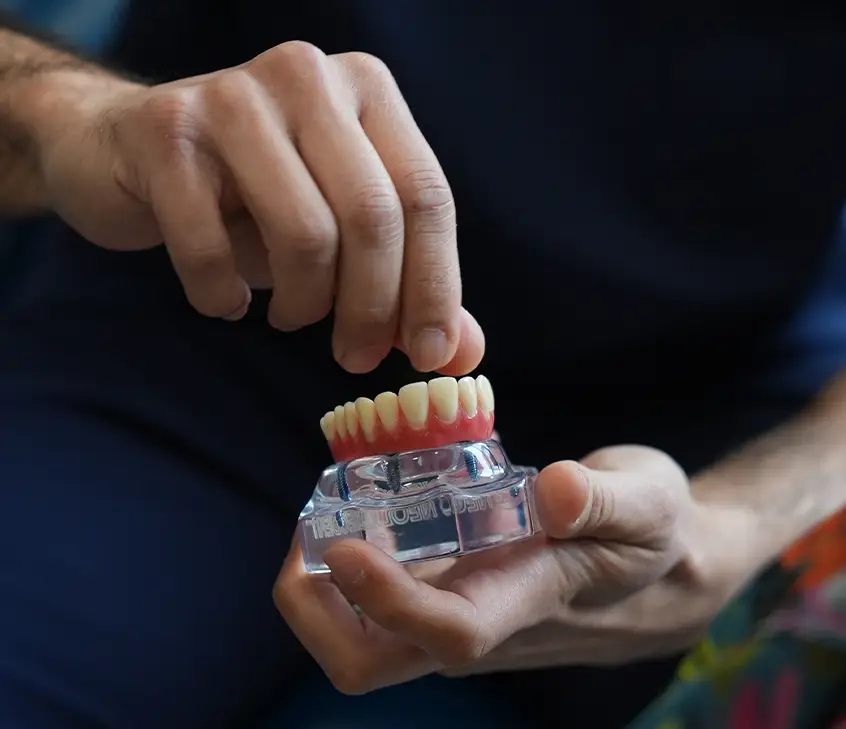
If most or all teeth in an arch are missing, we place 4–6 implants across the jaw to hold a full set of fixed teeth. The teeth share the load across the implants. In practice, that’s 10–12 teeth on 4–6 well‑positioned implants. Solid chewing. Confident smile. Everyday comfort.
What Decides The Number? The “Why” Behind The Plan
Bone Quality and Volume: Dense bone gives better grip. Thin bone may need grafting or a different design.
Bite Forces and Habits: Back teeth take more force. If you grind, we plan around it — and often suggest a night guard.
Implant Size and Position: Wider or longer implants can spread the load. Placement matters as much as size.
Prosthetic Design: Short spans behave better than long ones. Materials and connectors count.
Gum Health and Care: Healthy gums and good cleaning keep implants stable for the long term.
A Word On Evidence (Without The Jargon)
Decades of data support what most UK implant dentists already do. One crown per implant is the safest bet. A short cantilever can work in select cases. Full‑arch bridges are best supported by 4–6 well‑placed implants. Even spread. Even load. Fewer complications. It’s a careful, belt‑and‑braces approach — for good reason.
How We Plan Treatment At Regent Dental, Ilkley
We keep things clear and calm. No rush. You’ll have a full assessment with 3D scans, bite checks, photos, and a straight chat about your goals and daily routine. We design the smile first, then place the implants to suit that design. Not the other way round. Digital planning helps us be precise. Experience helps us keep it sensible.
What The Process Can Look Like
Planning: Scans, models, and a mock‑up of your new teeth.
Placement: Gentle surgery, often with local anaesthetic. Sedation available if needed.
Healing: The implant bonds with the bone over a few months. A temporary solution keeps you smiling.
Fit: Your final crown or bridge is crafted to match your bite and your face. Natural look. Comfortable feel.
Aftercare: Hygiene visits and home care keep everything healthy. We’ll show you exactly how.
Two Real‑World Examples
Upper right, three missing teeth: We placed two implants and fitted a three‑tooth bridge. Strong support. No need for a removable plate. Clean, seamless result.
Lower arch with several failing teeth: We used an All‑on‑4 approach. Four implants now hold a full, fixed lower set. She eats well, smiles often, and says the teeth feel “part of her”.
Why Fewer Implants Can Be More
Less surgery, faster recovery
Lower total cost than one implant per tooth
Easier to clean and maintain
Better chewing than traditional removable dentures
But Let’s Be Honest About Limits
Not everyone is suited to an implant that supports more than one tooth. Heavy grinding, smoking, gum disease, or certain health issues raise risk. Overloading a single implant is never worth it. Smart planning matters. So does your home care. Regular reviews help spot any changes early.
What Might Suit You?
It depends on your bone, your bite, your smile goals, and your day‑to‑day life. That’s why a proper consult is key. At Regent Dental in Ilkley, we’ll walk you through every option — single implants, implant‑supported bridges, or full‑arch implants like All‑on‑4 — and explain the trade‑offs in plain terms. No pressure. Just clear advice and a plan that fits.
Cost, Comfort, And Care — What To Expect
Costs vary with the number of implants, the type of teeth we fit, and any grafting needed. We’ll give a full, transparent breakdown.
Most people find the procedure easier than expected. Soreness is normal for a few days. Simple pain relief usually covers it.
Long‑term success needs teamwork. You, us, and a steady routine. Brush, clean between, and attend your checks. Little things that protect your investment.
Key Points To Remember
One implant usually supports one tooth. Most predictable outcome.
One implant can sometimes hold two teeth with a short cantilever — only in the right place with a light bite.
Three or more teeth in a row? You’ll typically need at least two implants for a stable bridge.
Full arches usually use 4–6 implants to support a fixed set of 10–12 teeth.
Success depends on bone, bite forces, implant position, and careful design — plus your home care and maintenance.
Ready To Explore Your Options?
If you’re weighing up dental implants in Ilkley or across Yorkshire, we’re here to help. Pop in for a chat, bring your questions, and we’ll put the kettle on. We’ll talk through timelines, costs, and what suits you best. Calm, measured, and honest.
About Regent Dental
Regent Dental is a modern dental and aesthetic clinic in Ilkley. We provide implant dentistry, smile design, and restorative care with a warm, no‑nonsense Yorkshire touch. Want to get started? Give us a call or visit our website to book your consultation.
Conclusion
One implant can do a lot — but it works best when the plan is tailored to you. For most people, that means one implant per tooth. In some cases, one implant can support two teeth. For longer spans or full arches, we use multiple implants to spread the load and protect your jaw. The goal? Teeth that look natural, feel secure, and fit your life. Thoughtful planning gets you there.