 (3) (1).png)
Short answer: yes. IV sedation dental care can help many nervous patients feel calm and comfortable while staying conscious. Medicine is given through a vein to reduce anxiety and make appointments feel quicker. It is generally suitable for healthy adults after a careful medical assessment, but it is not right for everyone.
Key Points:
You remain responsive and breathe on your own
Anxiety and the gag reflex are reduced
Most people remember little of the visit
You must have an escort to take you home and rest for 24 hours
What Is IV Sedation In Dentistry?
IV sedation, also called intravenous conscious sedation, involves placing a small cannula in a vein, usually in your hand or arm. A sedative medicine, commonly midazolam, is given in carefully titrated doses so you feel deeply relaxed yet can still respond to your dentist. Local anaesthetic is still used to keep you comfortable.
It is different from general anaesthesia. You do not go to sleep, you do not need a breathing tube, and recovery is usually faster. Throughout your visit, your oxygen level, breathing, blood pressure, and heart rate are continuously monitored for safety. At Regent Dental, we complete a structured health assessment first to confirm that IV sedation is appropriate for you.
How Does IV Sedation Help Nervous Dental Patients?
IV sedation can make appointments much easier if you feel anxious or have had difficult experiences in the past. Benefits include:
Calmer feelings before and during treatment
Less awareness of sounds, sensations, and time passing
Reduced gag reflex and improved tolerance of lengthy procedures
Fewer pauses, helping treatment run smoothly and efficiently
For many people in Ilkley and across West Yorkshire, this approach makes it possible to complete care they have been delaying.
Who Is IV Sedation Suitable For?
IV sedation may be considered for adults who have:
Moderate to severe dental anxiety or phobia
A strong gag reflex that interrupts treatment
Difficulty tolerating long or complex appointments
Previous failed or abandoned appointments due to fear
It is not usually offered during pregnancy or if you have certain medical conditions, uncontrolled health issues, or potential medicine interactions. Your dentist will review your medical history, current medicines, alcohol intake, and any recreational drug use to ensure safety. If you are unsure, speak to our team about our approach to nervous patient care at Regent Dental.
What To Expect From IV Sedation
Before Your Appointment
Follow the specific instructions provided. At our practice this usually means no food for 6 hours before, and small sips of clear water until 2 hours before.
Avoid alcohol for 24 hours before your visit.
Arrange a responsible adult aged 18 or over to bring you to the practice, take you home, and stay with you for the rest of the day.
Wear loose sleeves and minimal jewellery, and bring an up-to-date list of your medicines.
During Your Appointment
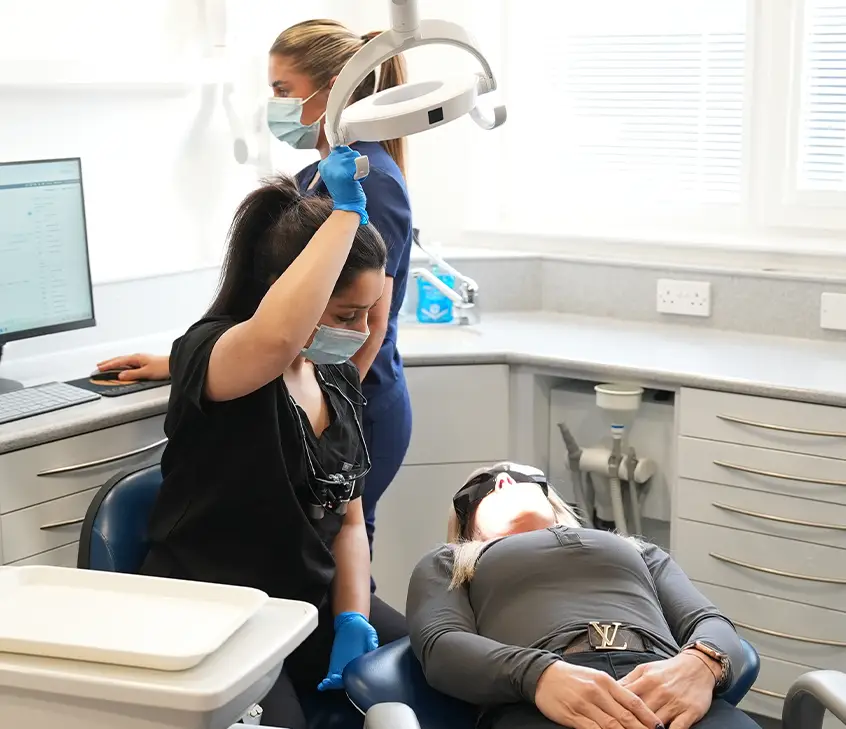
A small cannula is placed in a vein to deliver the sedative.
You become relaxed and sleepy but remain responsive.
Your breathing, oxygen level, pulse, and blood pressure are continuously monitored.
Local anaesthetic is used to keep you comfortable.
The dentist can pause or adjust the dose at any time.
After Your Appointment
You will rest in the practice until you are safe to go home with your escort.
Expect to feel drowsy for a few hours and to remember little of the visit.
For 24 hours do not drive, cycle, drink alcohol, sign important documents, care for dependants alone, or operate machinery.
Eat light meals, drink water, and follow your personalised dental sedation aftercare advice.
Contact the practice if you have concerns such as prolonged vomiting, heavy bleeding, or increasing pain.
Are There Risks Or Side Effects Of IV Sedation?
IV sedation is considered safe when delivered by trained teams with appropriate monitoring. Possible side effects and risks include:
Bruising at the cannula site, dry mouth, headache, or nausea
Temporary dizziness and drowsiness
Rare allergic reactions or paradoxical agitation
Very uncommon breathing or heart-related complications
Careful screening, dose control, and continuous monitoring reduce these risks. A reversal medicine for benzodiazepine sedation, such as flumazenil, is available if required.
How Much Does IV Sedation Cost?
IV sedation is an additional service charged on top of your dental treatment because it involves extra time, medicine, and monitoring. Fees vary with the length and complexity of your procedure. Flexible finance may be available. For guidance before you decide, please see our clear fees and finance options.
What Dental Treatments Can Be Carried Out With IV Sedation?
IV sedation can be used with many procedures, for example:
General dental care in Ilkley such as multiple fillings or extractions in one visit
Restorative dentistry including root canal treatment and dental implants in Ilkley
Cosmetic treatment such as composite bonding with SmileFast
Some orthodontic steps, such as placing attachments or polishing between teeth for Invisalign® clear aligners, if anxiety is high
Your dentist will advise whether sedation is suitable for your specific treatment plan.
Why Choose Regent Dental For IV Sedation?
Calm, unhurried appointments tailored to your needs
Clear explanations with written pre and post-sedation instructions
Continuous safety monitoring and a supportive, friendly team
Transparent fees and finance, with treatment planned at a pace that suits you
If you feel anxious about treatment or have been avoiding the dentist, we are here to help.
A gentle next step: book a sedation consultation or speak with our Ilkley team to discuss your options and confirm whether IV sedation is right for you.